Professional Dryer Vent Cleaning Services

Dryer Vent Cleaning Services | Residential & Commercial | Pure Air Ducts

Dryer Vent Cleaning That Protects Your Home and Your Dryer

Lint is one of the most flammable materials in an average home, and every load of laundry pushes more of it into the vent line behind your dryer. That line is hidden inside walls, ceilings, or crawl spaces, so almost nobody notices the buildup until drying times double or a scorched smell appears in the laundry room. Pure Air Ducts clears the full length of the exhaust run for homes, apartment buildings, and businesses across Howard County, Harford County, and Baltimore County, Maryland.

Our technicians combine rotary brush systems with HEPA-filtered negative-air extraction, so lint comes out of the duct instead of being pushed deeper into it or scattered across your floor. We finish by measuring airflow at the exterior hood, which tells you exactly what the cleaning accomplished rather than asking you to take our word for it.

With three offices and appointment windows from 8:00 AM to 8:00 PM, seven days a week, we can usually reach you within days. Call Pure Air Ducts to book your dryer vent cleaning.

Our Accreditation and Credentials

What Is Dryer Vent Cleaning?

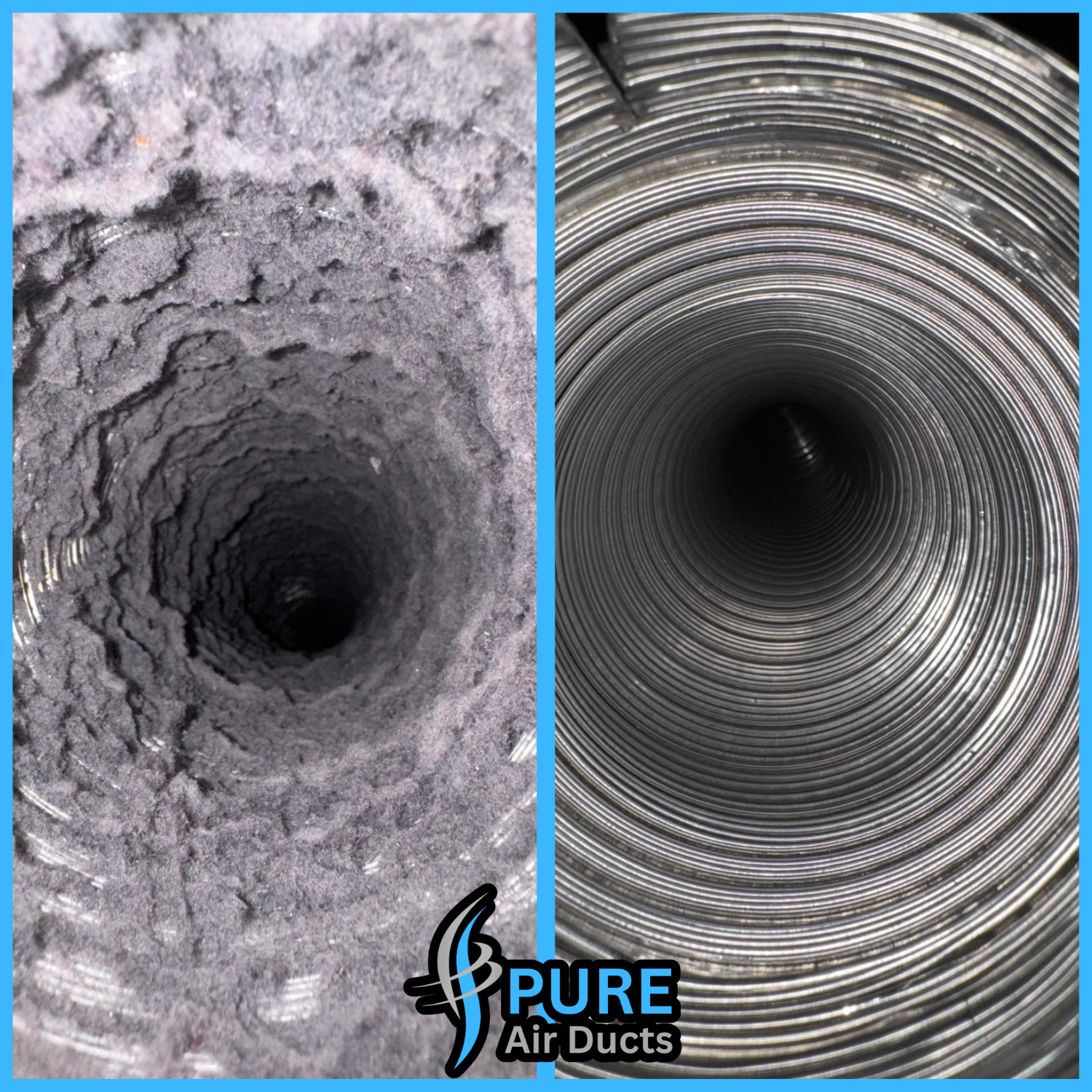
Dryer vent cleaning is the removal of lint, fabric fibers, and debris from the exhaust duct that carries hot, moist air from your dryer to the outdoors. Your lint screen traps a portion of what comes off your clothes. The rest travels into the duct, where it settles on seams, elbows, and ridges, layer after layer, until the passage narrows and the dryer can no longer push air through it.

A complete service covers far more than the visible opening behind the appliance. Our work includes the transition hose between the dryer and the wall, the entire concealed duct run, every bend and joint along the way, the exterior termination hood and its flapper, the lint trap cavity inside the dryer cabinet, and the blower housing where fibers collect out of sight.

Length and layout matter here. A first-floor laundry room venting straight through an exterior wall is a short, forgiving run. A basement or second-floor laundry may push exhaust thirty feet or more through multiple ninety-degree turns before it exits the building, and every turn is a place where lint catches and accumulates. Pure Air Ducts cleans the run end to end regardless of how it was routed.
Why Dryer Vent Cleaning Matters

Fire Prevention

This is the reason the service exists. The U.S. Fire Administration estimates roughly 2,900 clothes dryer fires in residential buildings each year in the United States, and identifies failure to clean as the single leading factor behind them, responsible for about a third of those incidents. The National Fire Protection Association puts the broader annual figure for home fires involving clothes dryers or washing machines in the range of 14,000 to 16,000.

The mechanism is simple. Restricted exhaust traps heat inside the appliance and the duct. The dryer’s thermal cutoff cycles more often, surface temperatures climb, and packed lint sits directly in that heat. Given a long enough exposure, it ignites, and because the duct passes through wall and ceiling cavities, a fire that starts there reaches framing and insulation quickly.

Unlike most household fire risks, this one follows a predictable schedule and responds to routine maintenance.

Gas Dryer Safety and Carbon Monoxide

A gas dryer produces combustion gases, including carbon monoxide, that must leave the building through the same duct that carries the lint. When that duct is blocked, exhaust can back up into the laundry area. Carbon monoxide has no smell and no color, and early symptoms resemble ordinary fatigue or a headache, which is what makes it dangerous. Keeping the exhaust path open is a basic safety requirement for any gas-fired appliance.

Drying Performance and Energy Costs

A dryer works by moving heated air across wet fabric and carrying the moisture away. Choke the airflow and the moisture has nowhere to go, so the machine runs longer and hotter to accomplish the same job. If a load that used to finish in forty-five minutes now needs two cycles, you are paying roughly double for that load, every load, month after month. Clearing the vent restores the original cycle time, and the savings show up on your next utility bill.

Appliance Lifespan

Heat is what wears a dryer out. Blocked exhaust keeps the cabinet hot, which shortens the life of the heating element, the thermostat, the thermal fuse, the motor, and the drum bearings. A blown thermal fuse is one of the most common dryer repair calls, and a clogged vent is one of the most common reasons for it. Manufacturers build these machines to vent freely, and most warranties expect the venting to be maintained.

Moisture, Humidity, and Odor

Every drying cycle releases several pounds of water as vapor. When the exhaust cannot escape cleanly, that moisture ends up in your laundry room, inside the duct, and in the surrounding wall cavity. The result is condensation, a persistent damp or musty smell, peeling paint, and conditions that encourage mold growth in exactly the places you cannot see. Damp lint also compacts harder than dry lint, which accelerates the blockage.

Pest Entry

An exterior vent hood with a broken or stuck flapper is an open invitation. Birds nest in dryer vents, and so do mice, squirrels, and wasps. Nesting material blocks the duct completely, adds more combustible fuel to an already hot passage, and introduces droppings and debris into the airflow.
Signs You Need Air Duct Cleaning

Most blockages develop slowly, so the warning signs are easy to rationalize away. Here is what to watch for.

Laundry Needs More Than One Cycle

The most common complaint we hear. If towels, jeans, or bedding come out damp after a full cycle and you have gotten used to running everything twice, the vent is restricted. A healthy dryer finishes a normal load on one setting.

The Dryer, the Clothes, or the Room Feels Very Hot

Clothes that are too hot to handle at the end of a cycle, a cabinet that radiates heat, or a laundry room that turns uncomfortably warm during use all point to heat that should be leaving the building and is not.

A Burning or Scorched Smell

Treat this as urgent. A hot, singed odor during operation usually means lint is being heated well past the point of safety. Stop using the dryer and schedule service immediately.

Lint Collecting Where It Should Not Be

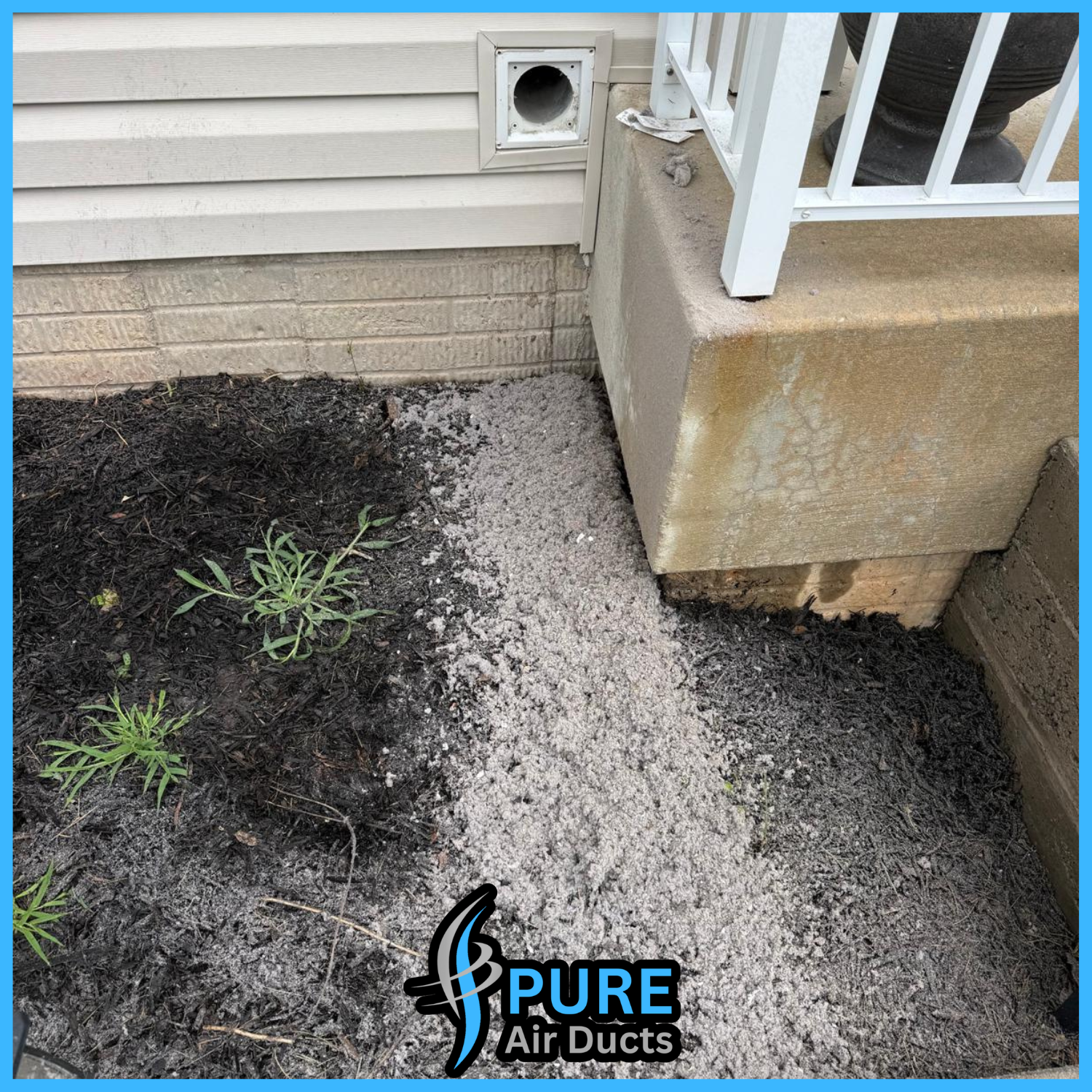
Fuzz on the floor behind the dryer, a buildup around the lint trap slot, or a pile of lint at the base of the exterior vent all indicate that the system is shedding material it cannot expel.

The Outside Vent Flap Does Not Open

Start a cycle, then walk outside and look at the vent hood. The flapper should swing open with steady warm air behind it. If it stays closed, barely moves, or you feel only weak air, the run is obstructed.

Excess Humidity or a Musty Laundry Area

Damp walls, foggy windows, a swollen door frame, or a stale smell in the laundry space are signs that moisture is staying indoors instead of venting out.

It Has Been More Than a Year

Most households should have the vent cleaned annually. Large families, homes with heavy pet shedding, and long or multi-elbow duct runs often need it more frequently.

You Have Never Had It Done

If you have owned the property for years and this has never crossed your mind, the vent is almost certainly overdue. Builders rarely clean these before handover, and previous owners may not have either.

You Recently Moved In or Replaced the Dryer

Starting fresh with a vent cleaning gives you a known baseline, and a new dryer will not perform to spec through an old, packed duct.

Not sure where your vent even terminates? We will find it during the inspection. Call to book a visit.

Our Dryer Vent Cleaning Process

Every job follows the same eight stages, whether it is a townhouse in Ellicott City or a twenty-unit laundry room in Baltimore County.

Step 1: Inspection and Baseline Airflow Reading

We locate both ends of the vent run, identify the duct material and the number of turns, and check the transition hose for crushing, kinks, or the flexible plastic and foil types that current codes no longer permit. We take an airflow reading at the exterior hood before touching anything, so the improvement can be measured rather than assumed. Where access allows, a camera shows us the interior condition of the line.

Step 2: Workspace Protection and Appliance Access

We lay down protection for flooring and cabinetry, then carefully pull the dryer forward to reach the connection point. For gas units, the supply line is handled with appropriate care and reconnected properly at the end of the visit. Tight closets, stacked units, and pedestal installations are routine for us.

Step 3: Mechanical Agitation Through the Full Run

Compacted lint bonds to duct walls and will not simply fall out. We feed a flexible rotary brush through the line, sized to the duct diameter and rotating under power, so it scours the entire circumference and works through every elbow. We drive the line from end to end rather than cleaning the first accessible few feet and calling it finished.

Step 4: HEPA-Filtered Vacuum Extraction

A commercial negative-air vacuum runs on the duct throughout the brushing stage, so debris travels into a sealed HEPA-filtered collection unit as it is released. Our filtration captures 99.97% of particles down to 0.3 microns, which is why the lint ends up in our equipment instead of in your laundry room air.

Step 5: Exterior Termination and Hood Service

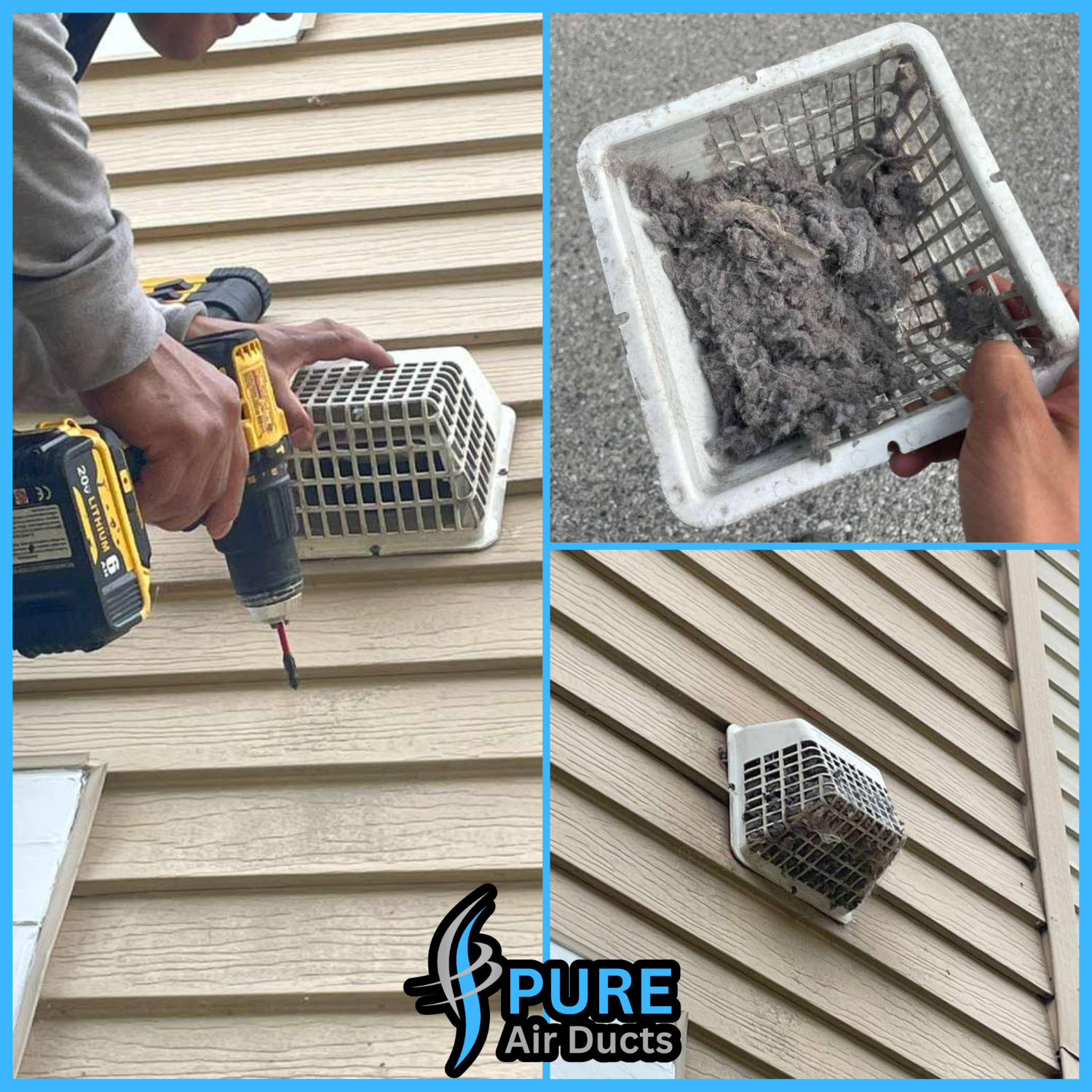
The outside vent is where blockages most often finish forming. We clear the hood, free or replace a stuck flapper, remove any nesting material, and verify the opening is properly sized and unobstructed. If a screen or cage has been installed over the vent, we will flag it, because those trap lint and cause the very problem they were meant to prevent.

Step 6: Dryer Cabinet, Lint Trap Housing, and Transition Hose

We clean the lint screen cavity and the blower compartment inside the appliance, where fibers accumulate steadily and are never reached by emptying the trap. The transition hose is cleaned or, if it is damaged or non-compliant, we recommend replacing it with rigid or semi-rigid metal.

Step 7: Reconnection, Testing, and Safety Verification

The dryer is reconnected, sealed with appropriate materials, and returned to position. We run a cycle and take a second airflow reading at the exterior hood to confirm the improvement. On gas appliances, we verify the connection and check for leaks before we leave.

Step 8: Documentation and Honest Recommendations

You receive a written record of the work, before and after photos where useful, and the airflow figures from both readings. If we found something worth addressing, such as a crushed duct section, an oversized run, a disconnected line venting into a crawl space, or a vent terminating into an attic instead of outdoors, we explain it plainly and let you decide. We do not invent problems, and we do not sell services you do not need.

Residential and Commercial Dryer Vent Cleaning

Residential Service

A standard single-dryer home visit takes about one to two hours, depending on the length of the run and how much material has built up. You are welcome to be present, and we ask only for clear access to the laundry area and the exterior vent. We handle single-family homes, townhouses, condominiums, and rental properties, including situations where the laundry room sits far from an exterior wall and the duct travels a long, winding path to get out.

Landlords and property managers use us for turnover cleanings between tenants, which is a sensible point to reset the system, since there is rarely any record of when it was last serviced.

Commercial Service

Commercial work brings volume and consequence. A laundromat, hotel, gym, salon, assisted living facility, restaurant, or apartment building may run dryers continuously for sixteen hours a day, generating lint at a rate no residential machine approaches. Many of these properties also have shared or manifolded exhaust systems, booster fans, and long rooftop runs that demand specific equipment and experience.

For these clients we work around operating hours, service multiple units in a single mobilization, and provide the written documentation that insurers, fire marshals, and corporate compliance programs typically require. Commercial systems generally need quarterly to semiannual attention, and we will help you set a schedule based on actual load volume rather than a generic interval.

Benefits of Professional Dryer Vent Cleaning

Substantially lower fire risk. You are removing the fuel from the one place in your home where flammable material and sustained heat sit together.

Normal drying times restored. One cycle, one load. Customers routinely tell us the difference is obvious from the first wash after we leave.

Lower energy costs. A dryer running half as long uses half as much gas or electricity, and that repeats with every load for the rest of the year.

A longer-lasting appliance. Less heat stress means fewer failed thermal fuses, heating elements, and motors, and more years out of a machine you already paid for.

A drier, fresher laundry area. Moisture leaves the building the way it was designed to, so humidity, musty odors, and the mold conditions that follow them do not take hold.

Clean air during the work. HEPA containment means the lint we remove leaves with us rather than settling on your floor or circulating through your home.

Documentation when you need it. Written records with airflow readings support insurance requirements, inspections, and property management files.

What Makes Pure Air Ducts Different

We Clean the Whole Run

The shortcut in this industry is to vacuum what is reachable from behind the dryer and finish in fifteen minutes. That leaves the hardest-packed material exactly where it does the most damage. We brush and extract the complete length of the duct, from appliance to exterior hood, every time.

We Measure the Result

Before and after airflow readings turn a claim into a number. You should not have to guess whether the work accomplished anything, and with us you do not have to.

Mold-Certified Technicians

Dryer vents are a moisture pathway, and moisture problems are our other specialty. Our team is certified to identify and treat mold in ventilation systems, so when we find dampness or growth in a vent line or the surrounding cavity, we can address it properly and explain what caused it.

Clear Pricing, No Theatrics

You get the price before we start, and it does not change once we are inside. We do not run bait advertising, we do not stage alarming photographs, and we do not pressure anyone into add-on services. If your vent is in reasonable shape, we will say so.

Three Local Offices, Seven Days a Week

Bel Air, Ellicott City, and Essex give us genuine coverage across our service area, and appointments from 8:00 AM to 8:00 PM every day of the week mean you are not forced to take a day off work. Weekends and holidays included.

Respect for Your Property

Our technicians arrive when they said they would, protect the surfaces they work around, move appliances carefully, and leave the laundry area cleaner than they found it.

Testimonials

Amy R, Essex, MD.

“Pure Air Ducts delivered exceptional air duct cleaning services that significantly improved the air quality in our home. Their team was professional, efficient, and genuinely caring throughout the entire process. They went above and beyond to ensure that our ductwork was thoroughly cleaned, leaving our home safe and comfortable for our family. We are deeply grateful for their expertise and dedication. Pure Air Ducts is undoubtedly a company you can trust for top-notch air duct cleaning services.

Richard E, Ellicott City, MD.

“The professionalism and expertise of Pure Air Ducts during our air duct cleaning were outstanding. From the initial inspection to the final cleanup, their team was thorough, knowledgeable, and reassuring. They used state-of-the-art equipment to efficiently clean all of our air ducts, ensuring our home was safe and healthy again. We were particularly impressed with their attention to detail and commitment to excellence. Pure Air Ducts is truly a leader in the air duct cleaning industry, and we highly recommend their services.

Sherry H, Bel Air, MD.

“Choosing Pure Air Ducts for our air duct cleaning was the best decision we could have made. Their team was compassionate, understanding, and incredibly skilled at improving our home’s air quality. They meticulously cleaned our ductwork, paying close attention to both efficiency and thoroughness. Their communication was excellent, keeping us informed and involved every step of the way. Thanks to Pure Air Ducts, our home feels fresher and healthier. Their dedication and workmanship are simply unparalleled.

Understanding Common Concerns

“Doesn’t the lint trap catch everything?”

It catches a meaningful share, but not all of it. Fibers pass around and through the screen on every cycle, and the ones that escape are the ones that matter, because they settle in the part of the system you cannot inspect or clean yourself. A clean lint screen and a clean vent are two different maintenance tasks.

“Is this one of those services companies invent to upsell?”

It is a fair thing to ask, since some operators do sell it dishonestly. The service itself is legitimate, and the fire statistics are published by federal agencies, not by cleaning companies. What varies is the quality of the work. A genuine cleaning brushes the entire run under HEPA extraction and takes an hour or more; a fake one spends fifteen minutes with a shop vacuum at the wall. Ask any company you consider whether they take airflow readings and whether they service the exterior hood. The answers will tell you a lot.

“Could the brushing damage my duct?”

Not when the equipment is matched to the duct. We size brushes to the diameter, control rotation direction and speed, and adjust our method for rigid metal, semi-rigid, and flexible foil ducting. What we do find, fairly often, is pre-existing damage that the lint was hiding, such as a crushed section behind the dryer or a joint that has separated inside a wall. We report it rather than quietly working around it.

“Can I just buy a kit and do it myself?”

You can clean the transition hose and the area immediately behind the dryer, and doing that between professional visits is worthwhile. Full-run cleaning is harder than it looks. Consumer rod kits can disconnect inside a wall, leaving debris or the rod head stranded in the duct, and they reverse-thread easily when pulled back through an elbow. They also have no extraction, so a significant amount of what you dislodge ends up in the room or packed deeper into the line. Long runs, roof terminations, and second-floor laundries are not DIY territory.

“How much disruption should I expect?”

Very little. A typical home visit runs one to two hours. We need access to the laundry area and the exterior vent, and we ask that pets be kept elsewhere while the dryer is moved. Normal activity elsewhere in the house continues uninterrupted. Commercial jobs are scheduled around your operating hours.

“How often is it actually necessary?”

Once a year for a typical household. Increase the frequency if you do more than five loads a week, own shedding pets, dry heavy fabrics regularly, or have a vent run longer than about twenty-five feet or with several elbows. Commercial and multi-family systems usually need service every three to six months.

Frequently Asked Questions

How long does dryer vent cleaning take? Most residential visits take one to two hours, including inspection, cleaning, reassembly, and testing. Very long runs, rooftop terminations, or severe blockages take longer. Commercial jobs are quoted individually based on the number of units and system layout.

What exactly is included? Inspection with a baseline airflow reading, full-length rotary brush cleaning of the duct under HEPA vacuum extraction, cleaning of the transition hose, service of the exterior vent hood and flapper, cleaning of the lint trap cavity and blower housing, reconnection and testing, a second airflow reading, and written documentation.

How often should a dryer vent be cleaned? Annually for most homes. More often for high-volume households, pet owners, long or elbow-heavy duct runs, and any property where drying times have started creeping up. Commercial properties typically need quarterly or semiannual service.

Do I need to be home? Someone needs to let us in and be available at the end for the walkthrough, since we will show you what came out and go over the airflow numbers. You do not need to supervise the work itself.

How should I prepare? Clear a path to the dryer, empty the lint screen, and make sure the exterior vent is reachable, which may mean trimming back a shrub or moving stored items. Secure pets away from the work area. We handle everything else.

Will it make a mess? No. Our vacuum runs on the duct throughout the cleaning, so lint goes into a sealed HEPA-filtered container rather than into the room. We protect floors and surfaces and clean up before we leave.

What does dryer vent cleaning cost? Pricing depends on the length and complexity of the run, how the vent terminates, and whether we are servicing one unit or many. You get a firm figure before any work starts, with no add-ons introduced mid-job. Call us for a quote for your property.

Can you clean a vent that goes through the roof? Yes. Rooftop terminations are common in townhouses, condominiums, and commercial buildings, and we have the equipment and experience to service them safely.

What if the vent is completely blocked or damaged? We will tell you what we found and what it will take to fix. Crushed sections, disconnected joints, improper materials, and vents terminating into attics or crawl spaces instead of outdoors are all issues we encounter. We explain the problem and the options; the decision is yours.

Do you work on gas dryers? Yes. We handle the gas connection carefully, verify the reconnection, and check for leaks before finishing. Clear exhaust is especially important with gas appliances because of carbon monoxide.

Can you clean stacked or closet-installed units? Yes. Tight installations are routine. We take the necessary care when moving stacked machines and reposition them properly afterward.

My clothes still take too long after cleaning. What then? Airflow readings tell us whether the duct is now clear. If it is and the machine still underperforms, the issue lies with the appliance itself, most often the heating element or thermostat, and we will tell you so rather than selling you more cleaning. We would rather point you to the right fix.

Do you serve apartment buildings and laundromats? Yes. We handle multi-unit residential buildings, laundromats, hotels, gyms, salons, assisted living facilities, and other commercial properties, with scheduling built around your operations and documentation for compliance files.

How quickly can you come out? We usually have availability within the same week, and we book appointments from 8:00 AM to 8:00 PM every day, weekends and holidays included. If you are smelling something burning, tell us when you call and we will prioritize the visit.

Is there a guarantee? Yes. We stand behind the work with a satisfaction guarantee. If something is not right, we come back and correct it.

Related Services

Air Duct Cleaning — Your HVAC ductwork collects dust, allergens, and debris that circulate through every room. Professional cleaning improves indoor air quality and helps the system run as designed.

HVAC Maintenance — Seasonal tune-ups keep heating and cooling equipment efficient and catch small problems before they become failures.

Indoor Air Quality Assessment — If symptoms, odors, or humidity problems persist, a full assessment identifies the source and the practical fix.

Mold Remediation — Our certified technicians treat mold in ventilation systems and elsewhere on the property, and address the moisture conditions that allowed it to grow.

Many customers book dryer vent and air duct cleaning in the same visit, which saves a second appointment and covers both exhaust and supply ventilation at once.

Book Your Dryer Vent Cleaning

Lint does not clear itself, and the risk only grows with every load. Pure Air Ducts provides thorough, documented dryer vent cleaning for homes and businesses throughout Howard County, Harford County, and Baltimore County, Maryland.

What you get with us:

  • Full-length cleaning from the dryer to the exterior hood
  • Rotary brush agitation with HEPA-filtered extraction
  • Before and after airflow measurements
  • Mold-certified, MHIC-licensed technicians
  • Firm pricing with no surprise charges or pressure
  • Appointments 8:00 AM to 8:00 PM, seven days a week
  • Satisfaction guarantee

Offices: Bel Air, MD · Ellicott City, MD · Essex, MD

Hours: 8:00 AM – 8:00 PM, every day

Call Pure Air Ducts today to schedule your dryer vent cleaning or request a free quote.

Serving Bel Air, Ellicott City, Essex, and surrounding communities throughout Howard County, Harford County, and Baltimore County, Maryland.

Request A Free Quote

Contact us today to request your free quote for premium indoor air quality services in Maryland!